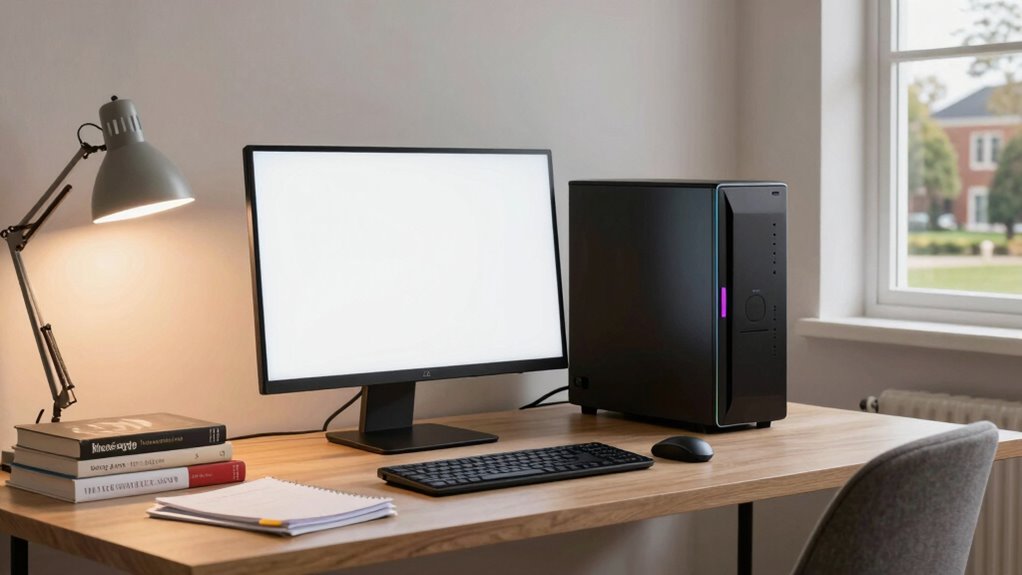
When choosing between an all-in-one and a desktop tower for grad school, think about your space and performance needs. All-in-ones are compact and portable, making them perfect for cramped dorms or shared apartments. However, desktop towers offer better performance and upgrade potential for demanding tasks. If you want something lightweight for studying on the go, go with an all-in-one. But if you need power and flexibility, a desktop tower might be your best bet. There’s more to contemplate!
Key Takeaways
- All-in-one computers save space, making them ideal for small graduate school living arrangements like dorms or shared apartments.
- Desktop towers offer superior performance and upgradeability, essential for demanding research or data analysis tasks.
- All-in-ones are lightweight and portable, facilitating easy transport for study sessions or group projects.
- Budget considerations are crucial, as all-in-ones may have higher costs for similar specs compared to desktop towers.
- Long-term satisfaction is influenced by upgrade potential; desktop towers allow for future enhancements, while all-in-ones may limit options.
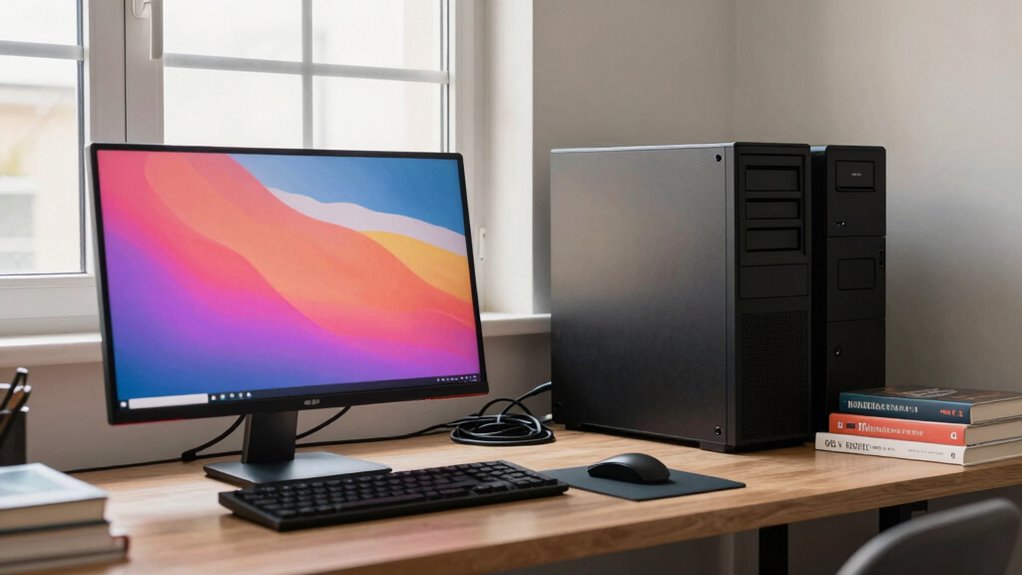
When choosing between an all-in-one computer and a desktop tower for graduate school, you’ll want to evaluate your specific needs and workspace. Each option has its pros and cons, so understanding how they stack up regarding performance and portability factors can help you make the best decision.
All-in-one computers are sleek and compact, integrating the monitor and CPU into a single unit. This design saves space, making it ideal for smaller living arrangements or shared spaces. If you’re working in a cramped dorm room or a shared apartment, an all-in-one can free up valuable desk space, allowing for a cleaner, more organized workspace. However, when you consider performance comparison, desktop towers often come out on top. Towers typically house more powerful components and can be upgraded more easily than all-in-ones. If you plan on running demanding software for research or data analysis, a desktop tower might be the better choice. You’ll likely find that towers can handle heavy multitasking and resource-intensive applications more efficiently than their all-in-one counterparts.
All-in-one computers offer space-saving convenience, but desktop towers excel in performance and upgradeability for demanding tasks.
Portability factors also play an essential role in your decision. If you foresee needing to move your computer frequently—whether to attend study sessions, group projects, or even just shifting between rooms—an all-in-one’s lightweight design can be a significant advantage. It’s easier to pack up and take along, making it a convenient choice for students on the go. On the other hand, a desktop tower can be cumbersome to transport, especially if you have a large monitor and multiple peripherals.
Ultimately, think about your study habits and lifestyle. If you prioritize ease of movement and a streamlined setup, an all-in-one might fit the bill. But if you’re focused on performance and potential upgrades for future needs, a desktop tower could be your best bet.
You should also consider your budget. All-in-ones can sometimes be pricier for similar specs compared to desktop towers, especially if you’re looking for a high-performance model. Weigh these factors according to what you value most in your graduate school experience. Additionally, understanding the upgrade potential of your chosen setup can influence long-term satisfaction and performance. Whether you choose an all-in-one or a desktop tower, make sure it aligns with your academic demands and personal preferences.
all-in-one desktop computer for students
As an affiliate, we earn on qualifying purchases.
As an affiliate, we earn on qualifying purchases.
Frequently Asked Questions
What Is the Average Lifespan of an All-In-One Computer?
The average lifespan of an all-in-one computer is about 3 to 5 years. You’ll appreciate its performance longevity during that time, but keep in mind that technology evolves quickly. Design aesthetics can make these devices appealing, but they can also limit upgrade options. If you want to maximize usage, consider how often you need to upgrade software and hardware. Ultimately, your choice should balance style and functionality for your needs.
Can I Upgrade Components in an All-In-One Setup?
You can’t always upgrade components in an all-in-one setup, and it’s like trying to fit a square peg in a round hole. While some models allow minor upgrades, like RAM or storage, many are locked down due to component compatibility issues. Before diving in, check your specific model’s upgrade options. If you crave flexibility and power, you might want to contemplate a desktop tower instead, where upgrades are more straightforward.
Are All-In-One Computers More Energy-Efficient Than Desktop Towers?
Yes, all-in-one computers are generally more energy-efficient than desktop towers. They have fewer components, which often leads to lower energy consumption. In a performance comparison, while desktop towers can offer more power and upgrade options, they typically draw more electricity. If you’re looking to save on energy bills while still getting decent performance, an all-in-one might be the better choice for you. It’s a balance between efficiency and capability.
What Accessories Are Essential for Graduate School Productivity?
To boost your productivity in graduate school, invest in essential productivity tools like a quality planner or digital task manager. An ergonomic setup is vital too; consider a comfortable chair and adjustable desk to maintain good posture during long study sessions. Don’t forget a reliable headset for virtual classes and noise-cancelling headphones for focused work. These accessories will help you stay organized and energized, making your study time more effective.
How Important Is Screen Size for Graduate School Tasks?
Screen size is essential for your graduate school tasks. A larger display enhances your screen resolution, making it easier to read texts and analyze data. You’ll find multitasking efficiency improves considerably, allowing you to work on multiple documents side by side without constant switching. This setup can reduce eye strain and boost your productivity, letting you focus more on your studies instead of squinting at tiny details. Invest wisely for your academic success!
desktop tower PC for demanding tasks
As an affiliate, we earn on qualifying purchases.
As an affiliate, we earn on qualifying purchases.
Conclusion
In the end, choosing between an all-in-one and a desktop tower is like picking a trusty steed for your academic journey. If you crave portability and a sleek design, the all-in-one is your nimble companion, gliding through tight spaces. However, if you need power and upgradeability, the desktop tower stands strong like an unwavering fortress. Ultimately, your choice should reflect your unique path—find the setup that feels like home as you navigate the challenges of graduate school.
portable all-in-one PC
As an affiliate, we earn on qualifying purchases.
As an affiliate, we earn on qualifying purchases.
upgradeable desktop tower
As an affiliate, we earn on qualifying purchases.
As an affiliate, we earn on qualifying purchases.