Neuroscience data analysis turns complex neural signals and brain imaging results into meaningful insights about how the brain works. You filter noise, identify patterns, and extract features from large datasets like fMRI, EEG, and PET scans. Combining different data types helps you understand where and when brain activity occurs. Using advanced tools like machine learning, you can map neural circuits and predict behaviors. Keep exploring to discover how these techniques reveal the brain’s mysteries further.
Key Takeaways
- Neural signal processing converts raw electrical data into interpretable neural communication patterns.
- Brain imaging techniques generate large datasets that reveal brain structure and activity locations.
- Combining EEG and fMRI data offers comprehensive insights into the timing and spatial aspects of neural activity.
- Machine learning algorithms efficiently analyze complex neural data for pattern recognition and prediction.
- Neuroscience data analysis advances understanding of brain function, aiding diagnosis and treatment of neurological disorders.
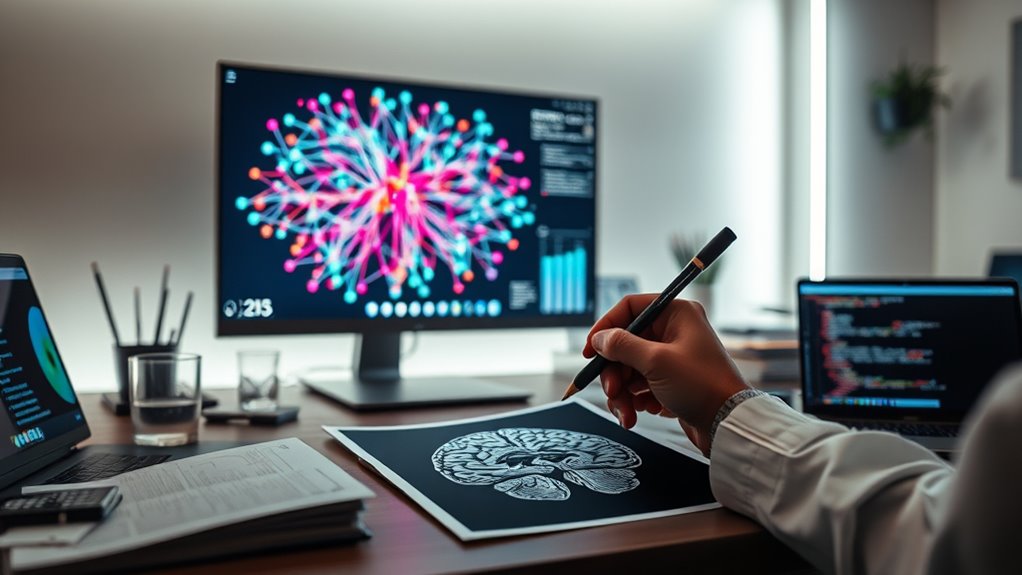
Neuroscience data analysis plays a critical role in understanding the complex workings of the brain. When you dive in neural signal processing, you’re fundamentally translating raw electrical activity into meaningful information about how neurons communicate. This process involves filtering out noise, identifying patterns, and extracting features from vast amounts of data collected from neural recordings. It’s a meticulous task, but it’s essential for revealing how different regions of the brain interact during various tasks or states. Brain imaging techniques, such as functional magnetic resonance imaging (fMRI), positron emission tomography (PET), and electroencephalography (EEG), generate enormous datasets that require sophisticated analysis methods. Your goal is to interpret these images and signals, translating visual or electrical data into insights about brain structure, function, and connectivity. Additionally, understanding the contrast ratio in imaging can significantly enhance the clarity and interpretability of neural visuals. With neural signal processing, you’re working at the intersection of biology and data science. You might start by preprocessing signals—removing artifacts and noise—and then apply algorithms to detect specific neural events or oscillations. These steps help you understand how neurons fire in sync, which is fundamentally important for studying everything from sensory processing to memory formation. By analyzing the timing and strength of these signals, you can identify patterns that correspond to particular cognitive or behavioral states. Brain imaging techniques provide a spatial map, showing where activity occurs, but neural signal processing adds the temporal dimension, revealing when and how activity unfolds over time. Your work becomes even more powerful when you combine multiple data types. For example, integrating EEG data with fMRI results lets you see both the timing and location of brain activity. This fusion offers a richer picture of neural dynamics. Advanced analytical tools, like machine learning algorithms, help you classify patterns, predict outcomes, or identify anomalies in the data. These techniques enable you to handle the complexity and volume of neuroscience data efficiently, extracting insights that were previously hidden. As you analyze neural signals and brain images, you’re not just processing data—you’re uncovering the language of the brain. Every pattern you detect helps build a more detailed map of neural circuits, advancing our understanding of cognition, emotion, and disease. It’s a demanding but rewarding process that demands precision, creativity, and a deep understanding of both neuroscience and data analysis. When you get it right, your work can open new frontiers in diagnosing disorders, developing treatments, or simply understanding how you think, feel, and perceive the world around you.
Frequently Asked Questions
How Do Researchers Ensure Data Privacy in Neuroscience Studies?
You guarantee data privacy in neuroscience studies by implementing anonymization techniques to remove personally identifiable information, making it difficult to trace data back to individuals. Additionally, you use data encryption to protect information during storage and transmission. These measures help safeguard participants’ privacy, comply with ethical standards, and maintain trust in your research. Combining anonymization and encryption creates a robust security framework that keeps sensitive data protected throughout your study.
What Are the Common Pitfalls in Neuroscience Data Analysis?
Imagine steering through a minefield—one wrong step can lead to disaster. Common pitfalls in neuroscience data analysis include falling into traps like data contamination, which skews results, and making statistical misinterpretations that paint false pictures of brain activity. You might overlook subtle signals or overstate findings, risking flawed conclusions. To avoid these pitfalls, scrutinize your data meticulously and double-check your statistical assumptions, ensuring your insights stand on solid ground.
How Does Machine Learning Enhance Neuroscience Data Interpretation?
Machine learning enhances your neuroscience data interpretation by identifying complex neural patterns that traditional methods might miss. With predictive modeling, you can forecast brain activity or behavior based on neural data, making your analyses more precise. This approach helps you uncover hidden relationships, improve accuracy, and gain deeper insights into brain functions, ultimately advancing your understanding of neural mechanisms and aiding in developing targeted interventions.
Are There Standardized Protocols for Data Sharing in Neuroscience?
Yes, there are standardized protocols for data sharing in neuroscience. You can access data through standardized repositories like OpenNeuro and NeuroVault, which promote data harmonization across studies. These protocols guarantee consistency, transparency, and ease of collaboration. By following these standards, you help maintain data quality and facilitate reuse, accelerating scientific progress. Your adherence to these protocols makes your data more accessible and valuable to the research community.
How Can Beginners Start Learning Neuroscience Data Analysis Effectively?
To start learning neuroscience data analysis effectively, you should focus on understanding neural signal processing fundamentals and practicing with real datasets. Use online tutorials and courses that cover statistical modeling techniques, like regression or machine learning. Break down complex concepts into manageable parts, and experiment with tools like MATLAB or Python. Consistent practice and engaging with community forums will boost your skills and confidence in analyzing neural data.
Conclusion
So, after all this, you might think neuroscience data analysis is a mystery best left to the experts. But honestly, with a little effort, you’re now equipped to unravel those complex brain signals yourself. Who knew that decoding neural data could be so approachable? It’s almost funny how what once seemed intimidating is now within your reach. So go ahead—dive in and prove everyone wrong. Who said neuroscience had to be complicated?