
In crime labs, forensic science relies heavily on statistical data from DNA and fingerprint databases. These tools compare evidence with millions of profiles, providing high-confidence matches through likelihood ratios and match scores. The extensive data and advanced analysis improve accuracy and speed, making identification more reliable for investigators and courts. If you want to understand how these stats turn physical evidence into court-proof, keep exploring how data shapes forensic investigations.
Key Takeaways
- Crime labs utilize extensive DNA and fingerprint databases containing millions of profiles for identification.
- Statistical likelihood ratios quantify the strength of forensic matches, providing measurable certainty.
- Automated systems like AFIS enhance fingerprint matching speed and accuracy through data analysis.
- DNA and fingerprint data enable forensic evidence to be converted into quantifiable, court-credible proof.
- The growth of databases improves forensic reliability, speeding case resolution and supporting legal decisions.
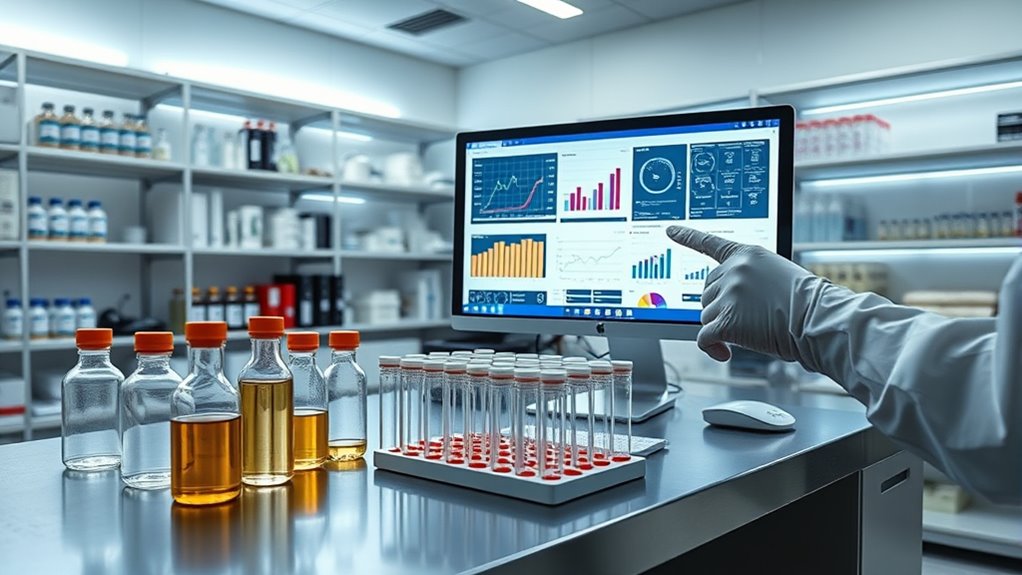
Have you ever wondered how forensic science helps solve crimes with statistical evidence? One of the most powerful tools in your forensic toolkit is DNA analysis. When investigators collect evidence from a crime scene, they often extract DNA to identify suspects or victims with high accuracy. DNA analysis compares genetic material found at the scene with known samples stored in fingerprint databases or other repositories. These databases contain millions of DNA profiles from convicted offenders, arrestees, and even unidentified remains. When a suspect’s DNA matches a profile in the database, it provides statistical certainty that links them to the crime scene. This process isn’t just about finding a match; it’s about understanding the probability that the match occurred by chance. Forensic statisticians calculate the likelihood ratio, which states how many times more probable it is that the DNA came from the suspect rather than a random individual. These calculations give courts a clear understanding of the strength of the evidence, making DNA analysis a vital component in criminal justice. Advances in database technology continue to improve the accuracy and speed of these comparisons. Fingerprint databases, similarly, play a vital role in solving crimes. When you lift fingerprints from a scene, forensic experts compare them to entries in national or regional fingerprint databases. These databases contain millions of fingerprint records from prior arrests, criminal histories, or unidentified individuals. Thanks to automated fingerprint identification systems (AFIS), the process is quick and efficient. The system analyzes minutiae points—tiny ridge endings and bifurcations—and produces a match score, which indicates how closely the prints align. Statistically, this score reflects the probability that the fingerprint belongs to a specific person, providing law enforcement with a dependable method to identify suspects. The more extensive and detailed the database, the higher the chances of making accurate matches, which can ultimately lead to solving cases faster.
Both DNA analysis and fingerprint databases leverage vast amounts of data to generate statistical evidence that’s persuasive in courtrooms. They turn physical evidence into quantifiable proof, helping law enforcement establish guilt or innocence with impressive certainty. As technology advances and databases grow, the statistical reliability of these methods improves, making forensic science an increasingly precise science. You can see how these tools, grounded in solid data and statistical principles, transform complex evidence into clear, actionable information. They serve as critical bridges between physical crime scene evidence and legal decisions, ensuring justice is served based on facts supported by robust statistical backing.
Frequently Asked Questions
How Accurate Are Forensic DNA Tests in Court?
DNA tests are highly accurate, making them reliable evidence in court, but their accuracy depends on proper collection and analysis. You should know that DNA reliability is generally strong, yet errors can occur, affecting legal implications. When used correctly, forensic DNA evidence can confidently link suspects to crimes or exclude innocent individuals, but courts also consider potential contamination or mishandling that could undermine its trustworthiness.
What Is the Average Backlog Size in Crime Labs?
Like a river overflowing its banks, crime lab backlogs can become overwhelming. On average, labs face a backlog of around 4,000 cases, which hampers timely justice. Staffing challenges and budget constraints slow down backlog reduction efforts, leaving evidence waiting in line. Addressing these issues requires increased funding and staffing to clear the backlog faster, ensuring evidence gets analyzed promptly and justice is served more efficiently.
How Do Forensic Labs Handle Contaminated Evidence?
You handle contaminated evidence by prioritizing contamination prevention through strict protocols and proper evidence handling procedures. First, you perform evidence sterilization to eliminate any biological or chemical contaminants, ensuring the integrity of the evidence. You also isolate suspicious samples and use protective gear to prevent cross-contamination. These steps help maintain the evidence’s integrity, making it reliable for forensic analysis and legal proceedings.
What Training Is Required for Forensic Analysts?
You need specialized forensic training programs to become a forensic analyst, as over 80% of labs require certification. Your forensic analyst skills must include attention to detail, critical thinking, and knowledge of lab procedures. You’ll undergo rigorous training that covers evidence handling, lab techniques, and legal standards. This guarantees you’re well-prepared to analyze evidence accurately and maintain the integrity of forensic work, essential for reliable crime solving.
How Quickly Can Forensic Results Be Delivered?
You can typically expect forensic results within days to weeks, depending on the case complexity and lab workload. To guarantee timely delivery, you follow evidence preservation and sample collection protocols carefully. Properly preserved evidence speeds up analysis, while adherence to collection protocols prevents contamination. Staying organized and communicating with the lab also helps expedite the process, so your case moves forward efficiently.
Conclusion
You now see how forensic science statistics are the heartbeat of crime labs, guiding justice like a steady compass through a stormy sea. These numbers aren’t just cold data; they’re the keys that reveal truth and bring order to chaos. When you understand their power, you realize each statistic is a brushstroke in the bigger picture of justice. Without them, the picture remains incomplete, like a puzzle missing its most essential piece.