
Understanding the difference between random and systematic errors helps you improve measurement accuracy. Random errors occur unpredictably and cause data to scatter around the true value; they can often be reduced by averaging multiple measurements. Systematic errors, however, cause consistent bias in your results and are harder to detect, leading to inaccurate data. Recognizing these errors allows you to apply proper corrections and guarantee reliable results. Keep going to learn how to identify and minimize both types effectively.
Key Takeaways
- Random errors cause unpredictable fluctuations and data scatter, while systematic errors create consistent measurement bias.
- Random errors can be minimized through averaging; systematic errors require calibration to correct.
- Recognizing error types is essential for improving measurement accuracy and data reliability.
- Ignoring systematic errors leads to persistent inaccuracies, unlike random errors that cancel out over time.
- Proper identification and correction of both error types are crucial for valid scientific and industrial measurements.
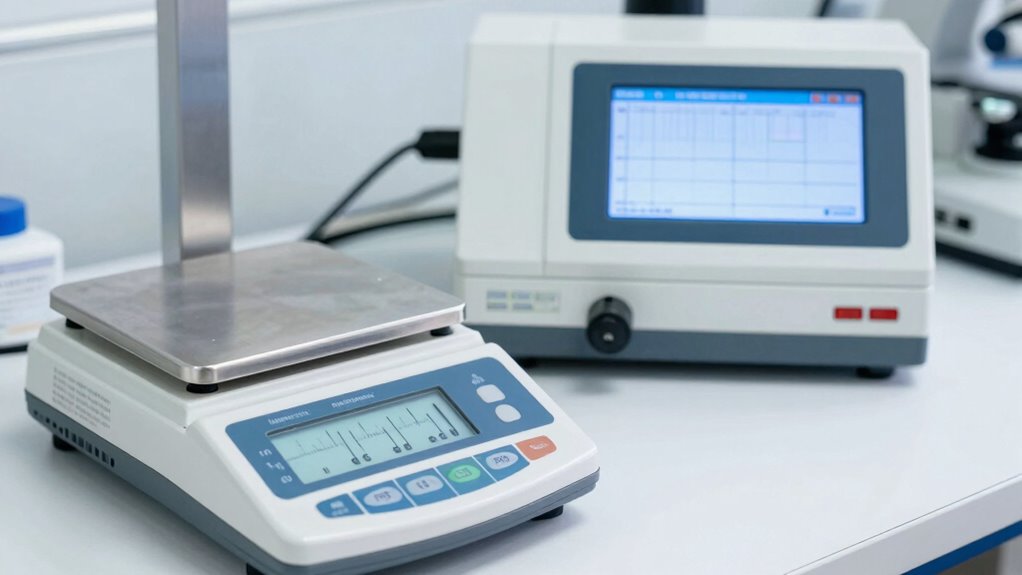
Have you ever wondered why measurements sometimes differ even when using the same instrument? It’s a common question, and understanding the answer is key to improving measurement accuracy. The main reason lies in the types of errors that occur: random errors and systematic errors. Recognizing the differences between them is vital because they impact measurement precision and data reliability in different ways. Random errors are unpredictable fluctuations that happen naturally during measurement. They can result from tiny variations in environmental conditions, slight inconsistencies in how you read a measurement, or minute changes in instrument behavior. Because they are unpredictable, they cause your measurements to scatter around the true value, making it seem like there’s a lot of variability. But here’s the good news: these errors can often be minimized by taking multiple measurements and averaging the results. Doing so improves measurement precision, giving you a more consistent and reliable estimate of the true value. On the other hand, systematic errors are more insidious because they tend to shift all measurements in a specific direction. These errors can stem from calibration issues, persistent biases in the measurement process, or flaws in the instrument itself. Unlike random errors, systematic errors don’t cancel out when you take multiple measurements; instead, they skew your data, compromising data reliability. For example, if a scale is incorrectly calibrated, every weight you record will be off by the same amount. Because of this, identifying and correcting systematic errors is essential for accuracy. If you ignore them, your data might appear consistent but still be wrong. This distinction matters because understanding whether errors are random or systematic guides your approach to improving measurement quality. If your goal is to increase measurement precision, you focus on reducing random errors through repeated measurements and better techniques. If you’re aiming for data accuracy, you need to identify and eliminate systematic errors—perhaps by recalibrating your instruments or refining your procedures. Recognizing the difference helps you interpret data correctly and maintain data reliability. Whether you’re conducting scientific research, quality control, or simple experiments, knowing how each error type influences your measurements allows you to make informed decisions. In essence, random errors introduce variability but can be mitigated through careful methods, while systematic errors consistently bias results, requiring correction. Understanding these measurement errors is crucial for developing effective strategies to improve data quality. Additionally, considering electric dirt bikes and their performance characteristics can help illustrate how different factors influence measurement and calibration in real-world applications. Furthermore, understanding the role of calibration procedures can significantly reduce systematic errors in practical settings. Proper calibration is fundamental because it directly affects the accuracy of measurements and helps prevent calibration errors that could otherwise go unnoticed.
As an affiliate, we earn on qualifying purchases.
Frequently Asked Questions
How Can I Identify if an Error Is Random or Systematic?
To identify if an error is random or systematic, focus on error detection methods and measurement accuracy. Random errors fluctuate unpredictably, so if your measurements vary without a pattern, they’re likely random. Systematic errors, however, consistently skew results in one direction, so if you notice a steady bias, it’s systematic. Analyzing multiple measurements and comparing them to a standard helps you distinguish between these errors, improving your measurement accuracy.
What Are the Real-World Consequences of Ignoring These Errors?
Ignoring errors is like sailing without a compass—you risk steering off course. If you dismiss measurement inaccuracies, your data reliability drops, leading to flawed conclusions. Random errors cause unpredictable fluctuations, while systematic errors skew results consistently. Overlooking these differences compromises measurement accuracy, which can misinform decisions and erode trust in your findings. Tackling both error types ensures your data remains precise, trustworthy, and valuable for sound decision-making.
Can Both Errors Occur Simultaneously in an Experiment?
Yes, both errors can occur simultaneously in an experiment. When this happens, error propagation can amplify inaccuracies, making results less reliable. You should use calibration techniques to identify and minimize systematic errors, but random errors may still persist. Recognizing the coexistence of these errors helps you improve data accuracy by applying proper error analysis and refining calibration procedures, ultimately leading to more trustworthy experimental outcomes.
How Do Measurement Tools Influence Error Types?
They say “a chain is only as strong as its weakest link,” and your measurement tools are no different. Your tools influence error types by affecting calibration issues and instrument precision. Poor calibration can cause systematic errors, while low precision leads to random errors. Choosing high-quality, well-calibrated tools minimizes both error types, ensuring your measurements are accurate and reliable. Always prioritize quality tools to keep errors in check.
What Methods Are Best for Minimizing Each Error Type?
To minimize random errors, you should use calibration techniques regularly to guarantee measurement consistency, and perform repeated measurements to identify variability. For systematic errors, applying calibration techniques helps correct biases in your tools, while data validation ensures accuracy by checking for anomalies or consistent deviations. Combining these methods allows you to reduce both error types effectively, improving the reliability of your measurements.
precision measurement instrument
As an affiliate, we earn on qualifying purchases.
As an affiliate, we earn on qualifying purchases.
Conclusion
Understanding the difference between random and systematic errors is like knowing the difference between a flickering candle and a steady lighthouse—one leads you astray, the other guides you true. By recognizing which error you’re facing, you can correct your course and trust your measurements. Don’t let errors be the ghost in your machine; instead, see them as signposts guiding you toward precision. Mastering this distinction empowers you to navigate science’s sea with confidence and clarity.
As an affiliate, we earn on qualifying purchases.
digital multimeter for calibration
As an affiliate, we earn on qualifying purchases.
As an affiliate, we earn on qualifying purchases.