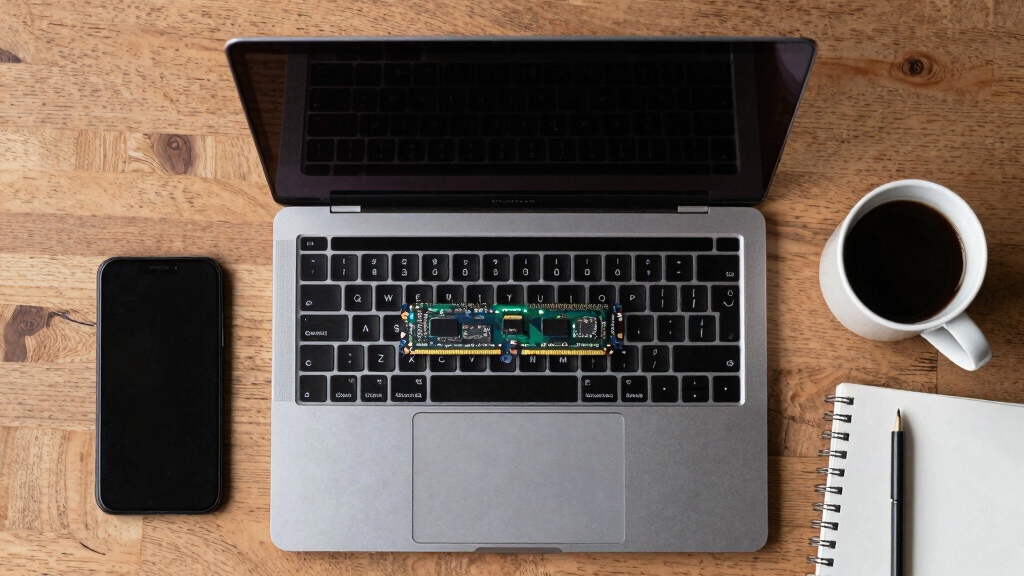

📊 Full opportunity report: The Memory Squeeze: Why Your RAM Bill Doubled on ThorstenMeyerAI.com — validation score, market gap, and execution plan.

Get business pricing on monitors, keyboards and dev gear
- Business-only prices and quantity discounts
- Tax-exempt purchasing
- Multiple users, one account, clear invoices
TL;DR
In 2026, RAM prices have surged by 90% in a single quarter, driven by a shift in chip manufacturing from consumer DRAM to AI-focused high-margin products. This ongoing reallocation has led to shortages and increased costs for PC components, with no immediate fix in sight.
RAM prices have doubled or more in 2026, with the cost of 32GB DDR5 kits rising from about $120 to nearly $375, and 64GB kits jumping from $200 to over $600. This dramatic increase is driven by a shift in manufacturing focus toward AI chips, making memory supply scarcer and more expensive for consumers.
The core reason for the price surge is that the factories producing DRAM now prioritize high-margin AI memory (HBM), which is far more profitable than standard DDR5. Three companies — Samsung, SK Hynix, and Micron — dominate the market, and they are reallocating wafer capacity to produce HBM modules, which sell for three to five times the price of DDR5. This shift is not temporary; it is a deliberate reallocation driven by economic incentives.
Because of the physics of wafer manufacturing, each wafer dedicated to HBM effectively reduces the supply of consumer DRAM by three or four times. As a result, the share of wafer output devoted to HBM has increased from 19% to 23%, and AI applications are projected to consume about 20% of all DRAM capacity in 2026. This ongoing reallocation means that traditional supply increases, which previously alleviated shortages, are not happening now. New fabs are years away from producing meaningful volume, and manufacturers are managing scarcity to preserve high margins rather than releasing more supply.
Why your RAM bill doubled
“Doubled” is the polite version — consumer DRAM is running 3–6× its 2024 lows. The boom-bust cycle that always brought cheap RAM back isn’t coming this time, because the factories that make your RAM now make something far more profitable instead.
HBM
This is the quiet tax on the whole AI era. Relief isn’t forecast before 2028, and even then prices may settle 30–50% above pre-crisis levels. Buy what you genuinely need now; don’t panic-buy capacity you won’t use. You can’t out-wait the fab math — but, as this series will show, you can shrink what you need. Next: HBM Ate the Fab.
Impacts of AI-Driven Memory Reallocation on Consumers
This shift has led to a significant increase in RAM prices, making high-capacity modules a costly component for PC builders and consumers. Many manufacturers and retailers have responded by raising prices or limiting availability, which could slow down PC upgrades and affect the broader tech market. Additionally, the concentration of supply among three firms and their past collusion record raise concerns about market fairness and long-term supply stability.
As an affiliate, we earn on qualifying purchases.
2026 Memory Market Shift and Prior Shortages
Historically, memory shortages have been temporary, eased by new capacity and market adjustments. However, the 2026 crisis differs because it stems from a permanent reallocation of manufacturing capacity toward AI chips, driven by higher profitability. The three dominant DRAM producers—Samsung, SK Hynix, and Micron—are intentionally prioritizing AI memory, reducing the supply of consumer DRAM and preventing traditional glut-and-price-drop cycles. This strategic shift is compounded by long lead times for new fab expansions, which are not expected to produce significant volume until 2027–2028.
“Our focus remains on serving enterprise AI markets, which has influenced the availability and pricing of consumer memory.”
— Micron spokesperson
As an affiliate, we earn on qualifying purchases.
Unresolved Questions About Market Dynamics
It remains unclear whether the current prices fully reflect the influence of market concentration and past collusion, or if scarcity alone drives the surge. The extent to which manufacturers might ease supply in the future or continue managing scarcity for higher margins also remains uncertain. Additionally, the long-term impact on consumer hardware availability and pricing is still developing.
As an affiliate, we earn on qualifying purchases.
Future Supply, Pricing Trends, and Industry Adjustments
Manufacturers are expected to continue prioritizing AI-related memory production in the near term, with new fab expansions unlikely before 2027–2028. Consumers and PC builders should anticipate ongoing high prices and limited availability for high-capacity RAM modules. Industry analysts will monitor whether new capacity, technological advances, or policy changes influence the supply-demand balance in the coming years.
As an affiliate, we earn on qualifying purchases.
Key Questions
Why have RAM prices increased so sharply in 2026?
RAM prices have surged because manufacturers are reallocating wafer capacity from consumer DDR5 to more profitable AI memory (HBM), which reduces supply and drives up costs.
Will RAM prices go down soon?
Likely not in the immediate future. New capacity is years away, and manufacturers are managing scarcity to preserve margins, not flooding the market with cheaper memory.
How does AI chip demand affect consumer hardware prices?
AI chip demand causes manufacturers to prioritize high-margin AI memory, reducing supply for consumer RAM and increasing prices for PC components.
Are these shortages temporary?
No. The current reallocation of manufacturing capacity is a deliberate, ongoing strategy, making the shortages more persistent than previous memory cycles.
Source: ThorstenMeyerAI.com
Halloween Picks
halloween
As an affiliate, we earn on qualifying purchases.