
📊 Full opportunity report: DDR5 Now, DDR6 Soon: A Buyer’s Field Guide on ThorstenMeyerAI.com — validation score, market gap, and execution plan.

Get business pricing on monitors, keyboards and dev gear
- Business-only prices and quantity discounts
- Tax-exempt purchasing
- Multiple users, one account, clear invoices
TL;DR
Market forecasts indicate DDR5 prices will remain high until 2028, making it better to buy what you need now. DDR6, arriving around 2027, is expensive and not suitable for most buyers today. This guide explains why.
Market forecasts and industry sources confirm that DDR5 memory prices are unlikely to drop significantly before 2028, and DDR6 will not be viable for mainstream consumers until around 2027. This development impacts PC builders and upgrade planners, emphasizing the importance of purchasing DDR5 now rather than delaying in anticipation of DDR6.
According to industry analysts and recent market reports, DDR5 memory prices are expected to remain elevated until at least 2028, with forecasts indicating that significant price relief will not occur before then. The current market conditions, driven by supply shortages and high demand, have caused DDR5 prices to stay high, making waiting for a price drop a risky strategy for most consumers.
Meanwhile, DDR6 technology is on the horizon, with initial adoption expected around 2027. DDR6 offers substantial performance improvements, including wider bus widths and higher transfer speeds (up to 17,600 MT/s), but it also requires entirely new platforms, including CPUs, chipsets, and modules. The first DDR6 modules will be targeted at enterprise and AI markets, with mainstream desktop adoption not expected until 2027 or later, at a premium price.
Experts advise that for most users, especially gamers and general consumers, buying DDR5 now is the best choice. DDR5-6000 CL30 kits remain the sweet spot for performance and price, while higher-speed kits like DDR5-8000 are unnecessary for typical workloads. Capacity planning should focus on actual needs, with 32GB suitable for gaming and everyday use, and 64GB for content creation or heavy multitasking.
DDR5 now, DDR6 soon
A buyer’s field guide. The 20-year instinct — wait for prices to drop, or wait for the next generation — is broken this cycle. Buy the DDR5 you actually need now; don’t wait for DDR6. Here’s the reasoning.
Driven to end-of-life, production slashed. Same money, dead-end socket. Leave a working DDR4 box alone — but never start a new build on DDR4 to “save.”
A framework, not a gamble. Buy the DDR5 you need now, at the sweet spot, in the capacity you’ll actually use — don’t buy DDR4, don’t wait for DDR6. The two costliest mistakes in this market are the ones that feel prudent: waiting for a price drop that isn’t coming, and waiting for a next-gen part that launches dearer than what’s on the shelf. Next: The SSD Squeeze.
Why Buying DDR5 Now Is the Smarter Choice
For consumers, this means avoiding the trap of waiting for DDR6, which is still years away and comes with a high cost and limited immediate benefit. Investing in DDR5 now allows users to build or upgrade systems that will remain relevant through 2028, without sacrificing performance or overspending on future technology that isn’t yet mature or affordable. Additionally, delaying upgrades in hopes of DDR6’s arrival could result in missing out on current platform improvements and performance gains.
As an affiliate, we earn on qualifying purchases.
Market Conditions and Future Memory Trends
The current memory market is characterized by supply shortages, high demand, and manufacturing constraints, which have kept DDR5 prices elevated. Historically, new memory standards like DDR4 and DDR5 took several years to become mainstream and affordable; DDR4 took about four years to reach widespread adoption, and DDR6 is expected to follow a similar timeline. Early DDR6 modules will be expensive, incompatible with current systems, and primarily targeted at enterprise and AI markets initially.
Industry sources note that DDR6’s architecture introduces significant technological advances, including quadruple sub-channels and higher transfer speeds, but these benefits are most relevant for specialized workloads like scientific computing and AI. For gaming and typical desktop use, DDR6’s advantages are minimal at launch, and the high costs make it unsuitable for most consumers in the near term.
“DDR6 offers substantial performance improvements but will arrive at a premium, with limited benefits for mainstream users in its early stages.”
— Hardware industry sources
As an affiliate, we earn on qualifying purchases.
Unclear Aspects of DDR6 Adoption Timeline and Pricing
While estimates place DDR6 mainstream availability around 2027, exact pricing, platform compatibility, and market adoption rates remain uncertain. The high initial costs and platform requirements could delay widespread adoption beyond initial projections, and early modules may face stability and capacity issues as manufacturers refine their designs.
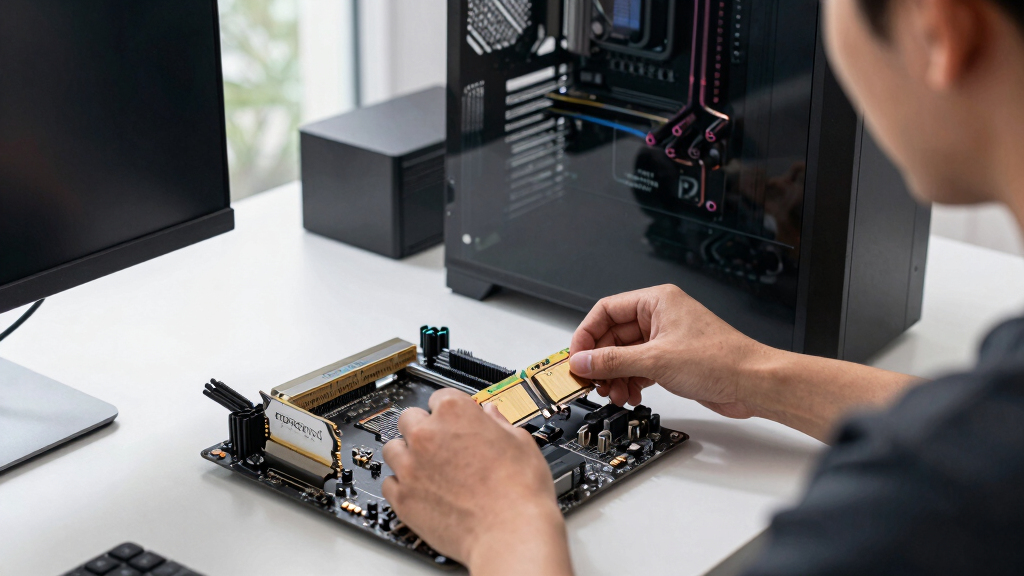
high performance DDR5 RAM for gaming
As an affiliate, we earn on qualifying purchases.
As an affiliate, we earn on qualifying purchases.
Next Steps for Consumers and Industry Watchers
Consumers should focus on building or upgrading systems with DDR5 now, prioritizing configurations that meet their current needs. Industry analysts will continue monitoring DDR6 standard development, chipset compatibility, and early module releases. Expect to see initial DDR6 products targeted at enterprise and AI markets in 2026–27, with mainstream availability likely not before 2027 or later. Staying informed on JEDEC standard progress and motherboard compatibility lists will be key for early adopters.
As an affiliate, we earn on qualifying purchases.
Key Questions
Should I wait for DDR6 before upgrading my PC?
Most users should not wait for DDR6, as it will be expensive, incompatible with current platforms, and not significantly faster for typical workloads in the near future. Building with DDR5 now offers better value and performance.
When will DDR6 be affordable and widely available?
Industry estimates suggest DDR6 will become mainstream around 2027, but initial modules will be costly, and widespread adoption may take until 2030.
Is DDR5 still a good investment now?
Yes, DDR5-6000 CL30 kits offer excellent performance and price balance for most users, and current market conditions favor buying now rather than delaying.
What are the main differences between DDR5 and DDR6?
DDR6 introduces wider sub-channels, higher transfer speeds (up to 17,600 MT/s), and a new form factor (CAMM2). It requires new platforms and is aimed at enterprise and AI markets initially.
Source: ThorstenMeyerAI.com
Halloween Picks
halloween
As an affiliate, we earn on qualifying purchases.