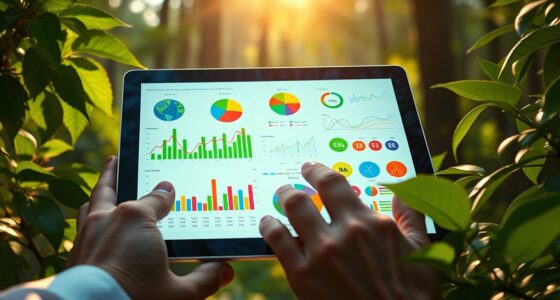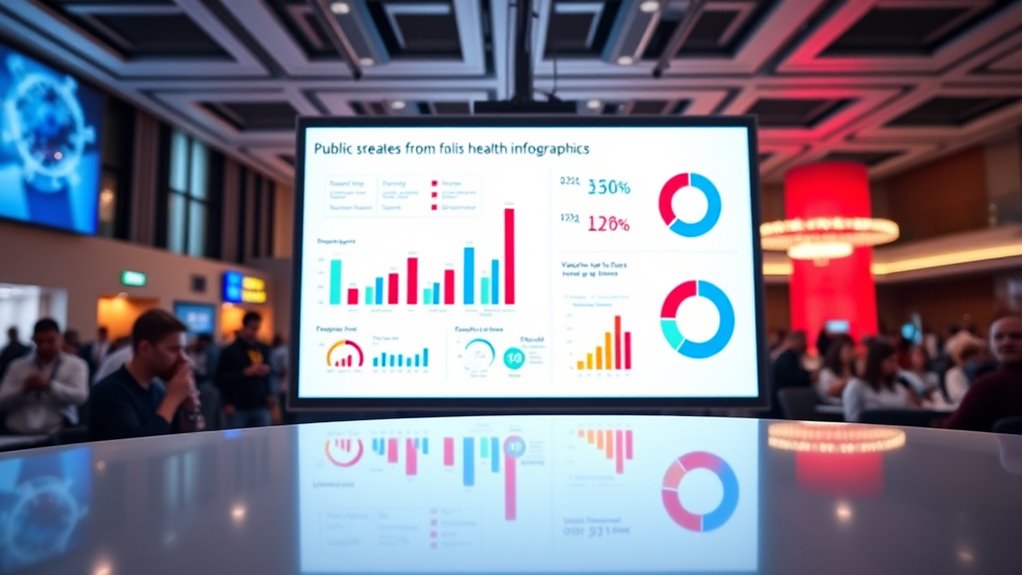
Public health statistics are all about understanding health data, trends, and risks in your community. They gather information from sources like hospitals and surveys to monitor conditions and guide health interventions. Using epidemiology methods, they analyze disease patterns, identify outbreaks, and help shape policies. By simplifying complex numbers and patterns, these statistics make health information more accessible. Keep exploring to discover how these tools can help improve community well-being and prevent future health issues.
Key Takeaways
- Public health statistics are data about community health, gathered from hospitals, surveys, and records to inform health decisions.
- They help identify health trends, risks, and disparities across different populations for targeted interventions.
- Epidemiology methods analyze these statistics to uncover disease causes, outbreak sources, and at-risk groups.
- Ongoing surveillance combines data collection and analysis to monitor health conditions and prevent crises.
- Clear interpretation of public health stats guides policy, resource allocation, and public awareness efforts.

Have you ever wondered how public health officials track the well-being of populations? It all begins with data collection. This process involves gathering information from various sources, such as hospitals, clinics, surveys, and community health records. The goal is to obtain accurate, timely data that reflects the health status of different groups. Once collected, this data serves as the foundation for understanding health trends, identifying risks, and developing effective interventions. But collecting data is just the first step. To make sense of it, public health professionals rely heavily on epidemiology methods.
Data collection is the first step in tracking population health and developing effective interventions.
Epidemiology methods are the tools and techniques used to analyze health data and uncover patterns or causes of diseases and health issues. Think of these methods as a detective’s toolkit, helping you piece together clues from the data to solve health mysteries. For instance, by analyzing when and where a disease outbreak occurs, epidemiologists can identify potential sources or transmission routes. They use statistical techniques to interpret the data, determining whether patterns are significant or just random fluctuations. These methods also help estimate the scope of health problems, such as how many people are affected by a specific condition or risk factor. Additionally, understanding the role of projector contrast ratios in image quality may seem unrelated but emphasizes how critical detailed analysis is in different fields.
Using epidemiology methods, public health officials can monitor trends over time, compare different populations, and assess the impact of health policies. For example, by tracking vaccination rates and disease incidence, they can evaluate whether immunization programs are effective or need adjustment. This approach allows for proactive measures before issues escalate into larger crises. Furthermore, epidemiology methods guide resource allocation, ensuring that efforts are focused on the most pressing health concerns.
The combination of diligent data collection and robust epidemiology methods makes public health surveillance possible. It enables officials to not only understand current health conditions but also predict future challenges. With this information, they can develop targeted strategies, allocate resources wisely, and communicate risks clearly to the public. Ultimately, these efforts help improve overall community health, prevent disease spread, and save lives. So, next time you hear about a health outbreak or new health initiative, remember that behind the scenes, meticulous data collection and expert epidemiology methods are working tirelessly to keep populations safe and healthy.
public health data collection tools
As an affiliate, we earn on qualifying purchases.
As an affiliate, we earn on qualifying purchases.
Frequently Asked Questions
How Often Are Public Health Statistics Updated?
Public health statistics are updated regularly, but the frequency varies depending on the data source. Typically, you can expect updates weekly or monthly, but reporting delays and data lag can cause some information to be outdated by the time it’s published. This means you might see some figures lagging behind real-time events. Staying aware of these delays helps you interpret the data more accurately and understand its limitations.
What Sources Are Used for Collecting Health Data?
Think of health data sources as a well-tended garden, where every plant represents essential information. You gather data from hospitals, clinics, government agencies, and surveys, guaranteeing each source adheres to strict reporting standards. You perform data validation to weed out inaccuracies, maintaining the garden’s health. This careful process ensures your health statistics are reliable, helping you make informed decisions to improve community well-being.
How Accurate Are Public Health Statistics?
Public health statistics are generally accurate, but you should be aware of potential issues like reporting biases and data inaccuracies. These can affect the reliability of the data, especially if some cases go unreported or underreported. While health agencies endeavor for precision, understanding these limitations helps you interpret the statistics critically, recognizing that they offer valuable insights but may not always reflect the complete picture.
Can Statistics Predict Future Health Trends?
Think of public health statistics like weather forecasts—you can’t predict every storm, but trend analysis and predictive modeling help you prepare. Yes, they can forecast future health trends by analyzing past data, spotting patterns, and projecting them forward. For example, recent trend analysis predicted a rise in flu cases last winter, helping health officials prepare. While not perfect, these tools give you a valuable glimpse of what’s ahead.
How Do Privacy Laws Affect Health Data Collection?
Privacy laws substantially impact health data collection by enforcing data privacy and imposing legal restrictions. You must guarantee that personal health information is protected and only collected with proper consent, following regulations like HIPAA. These laws limit how you can gather, store, and share data, making privacy a top priority. While they safeguard individual rights, you need to navigate legal constraints carefully to collect accurate health data effectively.
epidemiology analysis software
As an affiliate, we earn on qualifying purchases.
As an affiliate, we earn on qualifying purchases.
Conclusion
By understanding public health statistics, you gain the power to see through the noise and grasp the true story behind the data. These numbers become your guide, illuminating the path to better decisions and healthier communities. Don’t let complexity cloud your perspective—embrace the clarity they offer. Because in the end, knowledge isn’t just numbers; it’s the heartbeat of change, echoing with the promise that informed actions can transform lives and shape a brighter future.
community health monitoring kits
As an affiliate, we earn on qualifying purchases.
As an affiliate, we earn on qualifying purchases.
disease outbreak tracking tools
As an affiliate, we earn on qualifying purchases.
As an affiliate, we earn on qualifying purchases.