
📊 Full opportunity report: The Strategy Behind China’s Slow AI Innovation Leadership Shift on ThorstenMeyerAI.com — validation score, market gap, and execution plan.

Get business pricing on monitors, keyboards and dev gear
- Business-only prices and quantity discounts
- Tax-exempt purchasing
- Multiple users, one account, clear invoices
TL;DR
China is making tangible progress in domestic chip manufacturing and AI hardware, but the move toward AI leadership is a slow, deliberate process. This strategy focuses on building foundational capabilities over time, not quick wins.
China is actively progressing in its domestic chip manufacturing capabilities, with credible reports confirming the production of early-generation EUV lithography machines and 7-nanometer chips. These developments signal a deliberate, strategic shift toward strengthening its AI hardware infrastructure, but the overall pace remains measured and cautious.
Recent credible sources indicate that China has begun mass-producing domestic immersion DUV lithography machines, primarily targeting 28-nanometer nodes, with potential to reach 7- and 5-nanometer processes through multi-patterning techniques. SMIC, China’s leading semiconductor foundry, has demonstrated 7-nanometer production using older DUV tools, and is reportedly developing 5-nanometer capabilities. Meanwhile, Huawei aims to produce over a million AI-accelerator chips this year, reflecting a clear intent to bolster AI hardware.
However, significant hurdles remain. Yields for advanced chips in China are still low—around 20 percent for 5-nanometer chips—compared to the 90 percent yields typical of leading global fabs using EUV technology. Additionally, China relies heavily on imported high-purity materials, particularly photoresist from Japan, which underscores ongoing dependencies. Experts estimate China’s domestic tools lag behind those of industry leader ASML by approximately four generations, with commercial sub-10-nanometer production not expected before 2030. Furthermore, the installed base of DUV tools depends on Western servicing, creating a persistent dependency that hampers full self-sufficiency.
Every few weeks a headline says China cracked the last hard problem in chipmaking — and triggers alarm in one camp, triumph in the other. Both overreact, because both mistake a learning-by-doing problem for a copying problem. It isn’t one.
▲ Forward-looking · figures are point-in-time estimates“A machine exists” and “a machine makes advanced chips at scale, profitably, for years” are separated by a chasm — made of things that only accumulate with time.
In a race, a burst of speed closes the gap. In a phase transition, you can’t move faster to cross over — you have to accumulate enough, slowly, until the system changes state.
When you see “China achieves X,” ask which of two very different claims is actually being made.
Even amid the loud headlines, the quiet data points all say the same thing.
No prototype, no shipped tool, no yield headline teleports past it.
Strategic, Long-Term Approach to AI Hardware Development
This measured, phased strategy reflects China's recognition that achieving true AI leadership involves more than acquiring equipment—it requires accumulating tacit knowledge, refining processes, and building sustainable supply chains. While recent milestones are promising, the journey toward self-sufficient, high-yield, advanced semiconductor manufacturing remains lengthy and complex. For global AI development, China's approach indicates a focus on steady capability buildup rather than rapid dominance, which could influence future industry dynamics and supply chain resilience.
As an affiliate, we earn on qualifying purchases.
China’s Semiconductor and AI Hardware Progress Timeline
Over the past decade, China has prioritized developing its semiconductor industry amidst export controls and technological restrictions. Early efforts focused on copying existing technologies, but recent years have seen a shift toward indigenous innovation, including the development of domestic lithography machines and advanced chip fabrication processes. Despite these advances, the country faces technical challenges like low yields, reliance on imported materials, and lagging equipment generations compared to industry leaders like ASML. The current phase of development is characterized by incremental progress, with the goal of achieving full commercial viability in the next decade.
"China’s progress in chip manufacturing is real but deliberately slow, emphasizing learning-by-doing over quick wins."
— Thorsten Meyer
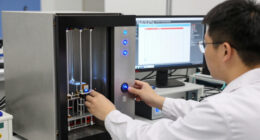
semiconductor manufacturing equipment
As an affiliate, we earn on qualifying purchases.
As an affiliate, we earn on qualifying purchases.
Uncertainties Surrounding China's Long-Term AI Hardware Goals
While recent developments are confirmed, it remains unclear how quickly China can overcome the technical hurdles—particularly in achieving high yields, reducing reliance on imported materials, and advancing equipment generations. The timeline for reaching full commercial capability at sub-10-nanometer nodes is uncertain, with industry forecasts suggesting around 2030. Additionally, the extent to which China can develop a self-sustaining supply chain without Western servicing remains unconfirmed.
As an affiliate, we earn on qualifying purchases.
Next Milestones in China’s Semiconductor Development Roadmap
Expect further announcements on progress in domestic lithography and chip fabrication processes, with a focus on improving yields and reducing dependency on imports. Industry analysts will closely monitor SMIC and Huawei’s production yields, as well as the development of indigenous materials and equipment. The next key step is achieving stable, high-yield manufacturing at sub-10-nanometer nodes, projected around 2030, which will mark a significant milestone in China’s AI hardware ambitions.
As an affiliate, we earn on qualifying purchases.
Key Questions
How close is China to achieving self-sufficient chip manufacturing?
While China has made notable progress, especially in producing early-generation EUV machines and 7-nanometer chips, significant technical hurdles remain. Achieving fully self-sufficient, high-yield, advanced manufacturing is expected to take several more years, with full commercial capability not anticipated before around 2030.
What are the main technical challenges China faces in chipmaking?
Key challenges include low yields at advanced nodes, dependence on imported high-purity materials like photoresist, lagging equipment technology compared to industry leaders, and reliance on Western servicing for complex machinery.
Why is China’s approach to AI hardware development considered cautious?
China emphasizes a phased, learning-by-doing strategy, focusing on building foundational capabilities, refining processes, and overcoming technical barriers gradually rather than rushing to meet short-term benchmarks.
How might these developments impact global AI and semiconductor markets?
While China’s progress signals a move toward greater independence, the technical challenges mean it will remain a secondary player in high-end chip manufacturing for the foreseeable future. However, sustained growth could influence supply chains and strategic industry positioning over the next decade.
Source: ThorstenMeyerAI.com
Halloween Picks
halloween
As an affiliate, we earn on qualifying purchases.